Ayodhya's Deep Dig: What the Ram Mandir Site Actually Shows Under the Stones
Excavations at the Ram Mandir site reveal continuous settlement from ~1300 BCE onward, but the earliest clear temple evidence dates to 10th–12th century CE—millennia after tradition places Rama's birth. The gap between devotional memory and verified archaeology is real.
SwavedaApril 30, 2026
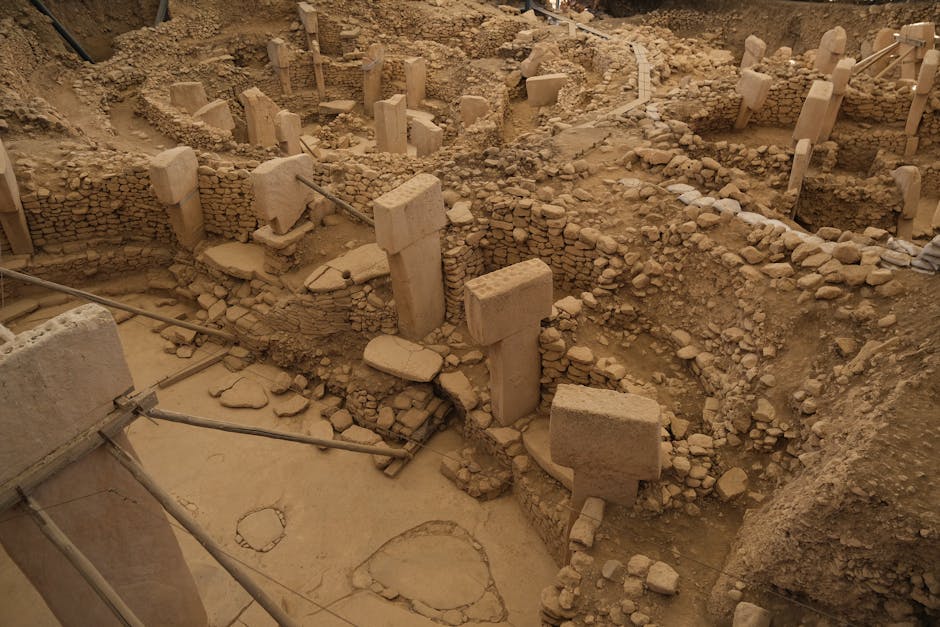
The Layers Beneath the Temple
The new Ram Mandir glows white under the Uttar Pradesh sun, a monument to centuries of devotion. But underneath it—in the darker earth that archaeologists have exposed in fits and starts over fifty years—lies a simpler story: not of one temple, but of a city that was inhabited, built upon, forgotten, and built upon again.
Tradition holds that Rama was born here, at this exact spot, sometime in the distant past. The devotion to this site is real and documented for centuries. But the archaeological evidence tells a different story—not a contradictory one, but a parallel one. What digging has actually found differs sharply from what the epic narrative claims about when Rama lived.
The Hard Dates
Let's start with the baseline facts, arrived at through carbon dating and ceramic analysis. The Ram Janmabhoomi site itself shows human activity dating back to circa 13th century BC, with pottery of a type called Northern Black Polished Ware indicating the first occupants. That's 2,700 to 3,200 years ago—a real settlement, real people.
But those are pottery sherds (broken pieces) and dirt layers. No structures. No temple remains.
Fast-forward. Several Buddhist buildings may have been constructed in the town during the rule of the Maurya emperor Ashoka in the third century BC. Then came the Kushans, the Sungas, the Guptas. Each layer tells of a city that mattered—a trading hub, a place of pilgrimage for Buddhists and Jains as well as Hindus.
The first clear historical references to a temple emerge during the Gupta period (4th–6th centuries CE), when the Guptas patronized Hinduism. While definitive proof of a Ram temple at the disputed site remains elusive, the period's growing prominence of Vaishnavism suggests the possibility of a shrine dedicated to Rama.
The Medieval Temple
Now the story gets concrete. The high court inferred that the foundation of the Babri Mosque was based on walls of a large pre-existing structure dating back to the 12th century with architectural features suggestive of Hindu religious origin. However, the Supreme Court concluded there is a time gap between this 12th-century structure and the 16th-century mosque construction, with no archaeological evidence on what caused the destruction.
What did archaeologists actually find? Among the recovered objects were terracotta Hindu images of the Kushan period (100–300 AD) and carved sandstone objects showing images of Vaishnav deities and Shiva-Parvati, which were concluded to belong to a temple of the Nagara style (900–1200 AD). K.K. Muhammed, an ASI archaeologist, confirmed the reuse of at least 12 pillars bearing Hindu motifs directly incorporated into the Babri Masjid's structure.
So: tradition holds there was a temple destroyed in 1528 when Babur built the mosque. Evidence shows a temple stood here sometime between the 10th and 12th centuries—but the chain of evidence linking it directly to Rama's birthplace, or pinpointing exactly when and how it was destroyed, remains incomplete.
The Gap
Here is the core issue that separates what believers say from what archaeologists can verify. The Ramayana places Rama's birth in the distant mythological past—tradition often locates this in the second age of Hindu cosmology, roughly 1800 BCE according to some scholars. Yet those who believe Rama was historical place his birth around 1800 BCE; however, the archaeological excavations at Ayodhya have not revealed any significant evidence directly linking the site to that era.
Nobody disputes that a city called Ayodhya existed in epic memory and in Hindu devotional practice. The Ramayana is a text we have. But the settlement layers at the site jump from scattered pottery (13th century BC) to organized city-life (5th–7th century BC). There is no temple layer from 1800 BC. There are no inscriptions naming Rama at that date.
The medieval temple (10th–12th century AD) is real. But it is 2,600 to 3,800 years after the traditional date of Rama's life.
The Controversy
It bears noting: Archaeologists who witnessed the 2003 excavations by the Archaeological Survey of India detailed irregularities they observed, noting the ASI appeared to operate with a preconceived notion of discovering temple remains beneath the mosque, even selectively altering evidence to suit its hypothesis. This does not settle which interpretation is correct—it highlights that the site has been scrutinized through a political lens, and readers should be cautious about claims of certainty in either direction.
The law courts made a decision about the land. Archaeology cannot decide theology or property ownership. What it can do—and what responsible archaeology must do—is separate the layers, date them carefully, and say: this is what we found, and this is what we do not know.
What the Layers Teach
Ayodhya was a real place, known by the ancient name Saketa, that rose to prominence during the period roughly 600–200 BCE when the Ganges Valley urbanized. Stratigraphy—the study of soil layers—reveals continuous habitation over centuries, with each cultural deposit contributing to a timeline that situates Ayodhya within the broader narrative of early Indian civilization.
Buddhists lived here. Jains lived here. Hindus worshipped here. Temples stood here. The site's sanctity is layered—not diminished—by that complexity.
The tradition that Rama was born at this spot is a form of sacred geography: meaningful in faith, not false as history. But the artifacts themselves speak a different language. Terracotta figures and carved stone objects show evidence of religious activity, but those datable remains belong to the Kushan period onward (100 AD and later)—long after the epic's claimed narrative time.
The new temple is built on soil that holds those layers. And they will remain, patient and mute, waiting for whoever wishes to read them honestly.